Recall your coursework in life science studies, and you might recall the role that forests play in the absorption of carbon dioxide from the atmosphere and the subsequent conversion to oxygen. This natural cycle is critical to controlling greenhouse gases and climate stability, and forests are rightfully lauded as one of our planet’s best carbon regulators. But if a tree that has absorbed carbon is cut down, where does that carbon go? Much of it, unfortunately, is released back into the atmosphere – and if that tree is processed for lumber, even more emissions are created, undoing much of the contributions of this tree to our environment.
When building with a future-oriented mindset, it’s not enough to store carbon if its temporary nature doesn’t significantly support to our planet’s well-being. To create lasting change in our building practices, look to the concept of Carbon Sequestration. Through this process, building materials can lock atmospheric carbon permanently from returning to the atmosphere, even long after a building’s useful life. For concrete masonry units (CMU), the energy used and resulting emissions from producing CMU are offset by the sequestration potential that CMU holds, effectively locking carbon out of the environment – and doing so more sustainably over time than many other building materials.
In this article, let’s discuss the differences between storage and sequestration, and further explore the potential for CMU to contribute to eliminating carbon emissions through natural processes.
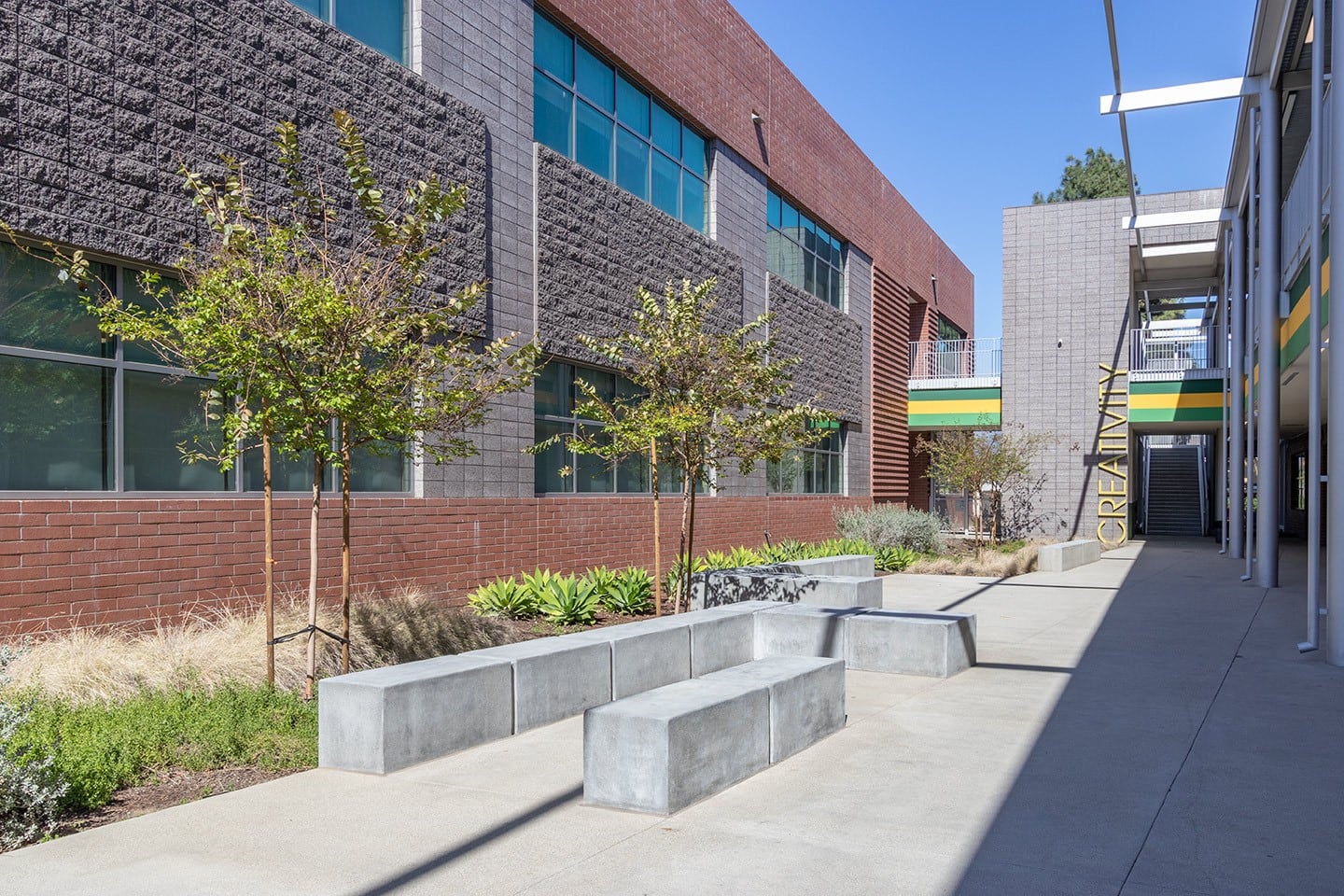
Carbon Storage Vs. Sequestration
Referring again to the carbon cycle and forests, Carbon Storage is the total amount of carbon stored within trees and other organisms – which is temporary, as the deterioration of the organism over time releases the absorbed carbon back into the atmosphere. Carbon Sequestration is concerned with the percentage of absorbed carbon that can be permanently removed from the atmosphere – for trees, this is typically the portion of carbon stored underground in root systems and biomass, which can reduce or prevent release when the tree is gone. Throughout the world trees vary in terms of carbon stored underground versus within the tree itself, with warmer climates tending to store less carbon in the soil.
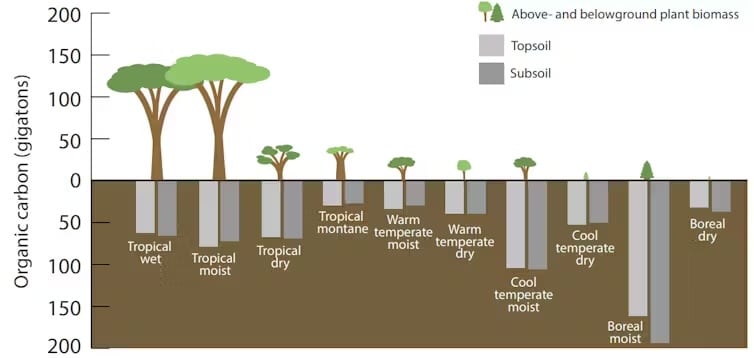
While trees store carbon efficiently in life, they are not permanent solutions and undo many of their gains when used for building material. In fact, when a tree is cut down and converted into lumber, it ceases to capture additional carbon and loses up to 85% of the total carbon it once stored. Breaking down that estimate, that’s 46% of its stored carbon lost during the logging process, 22% lost during milling, and an additional 17% estimated lost through transportation. Sequestered carbon in the soil can remain, but only as long as the soil itself is not disturbed – and oftentimes, cut trees are either cleared for construction (disturbing the stored carbon) or left to rot as stumps, emitting carbon through the decomposition process.
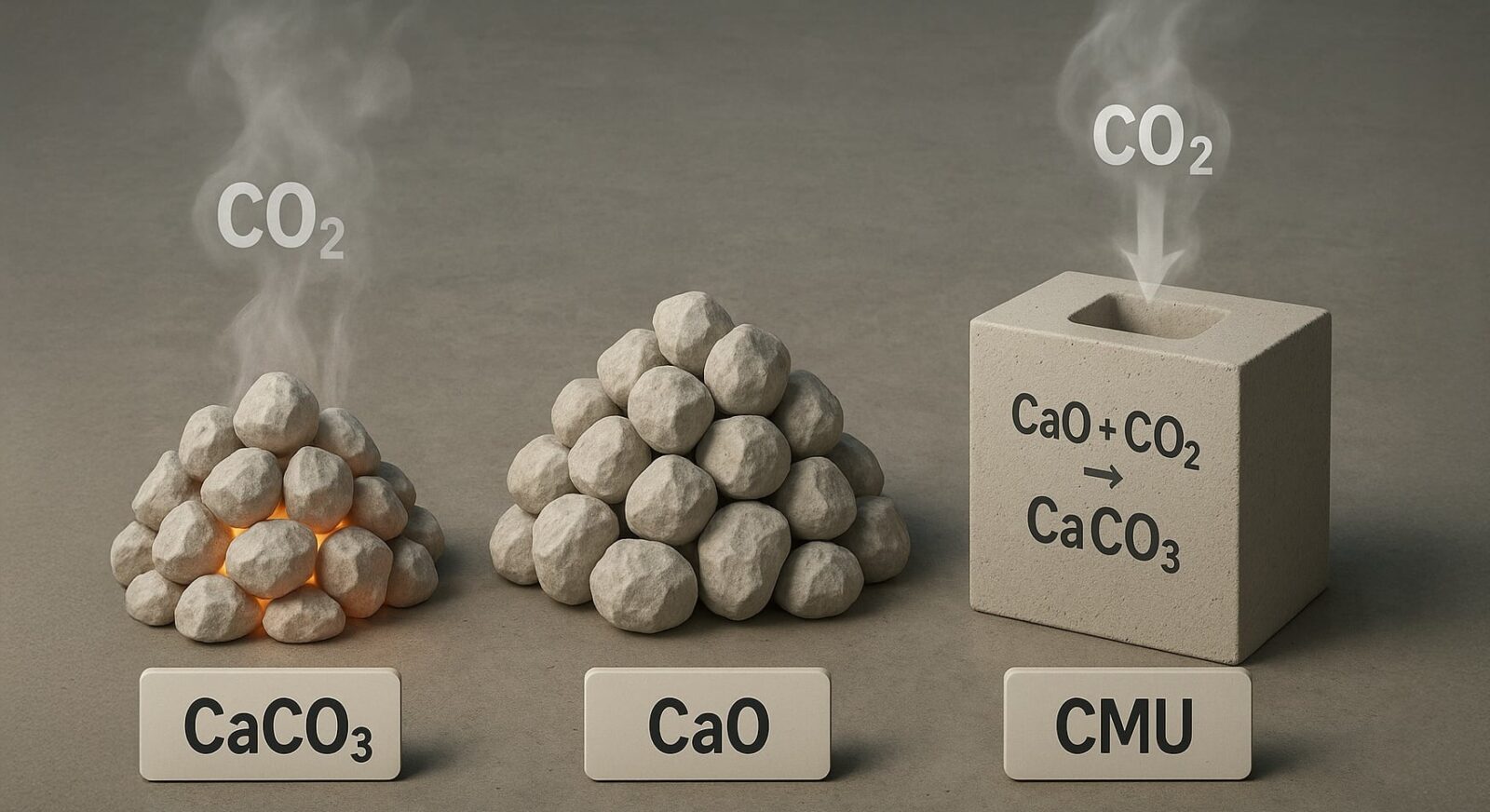
Meanwhile, CMU’s production process entraps the carbon emitted during its creation through concrete carbonation – permanently containing it unless it’s heated to a toasty 1,200 degrees F. This distinction is critical – concrete block can permanently hold carbon within it, versus lumber holding carbon only until decomposition. And those benefits remain when CMU is recycled for rebuilding.
Generally speaking, the amount of carbon dioxide absorbed or sequestered into the concrete depends upon the whether or not it is exposed to air, how much cement is used, the porosity of the concrete, and the environment to which it is exposed. CMU is considered dry-cast concrete, and due to its porous nature, carbon sequestration permeates both the inside and outside of block – making it much faster-absorbing than other concrete products.
Defining Sequestration Potential For CMU
To understand just how much carbon can be stored through sequestration in CMU, we need to delve deeper into the role cement has in CMU production, creating the upper ceiling of carbon CMU can capture.
Concrete carbonation is the chemical reaction between atmospheric carbon dioxide and the calcium oxide or calcium hydroxide present in concrete products. This reaction forms calcium carbonate, also referred to as carbonation or limestone mineralization – and this is the basis for Carbon Sequestration.
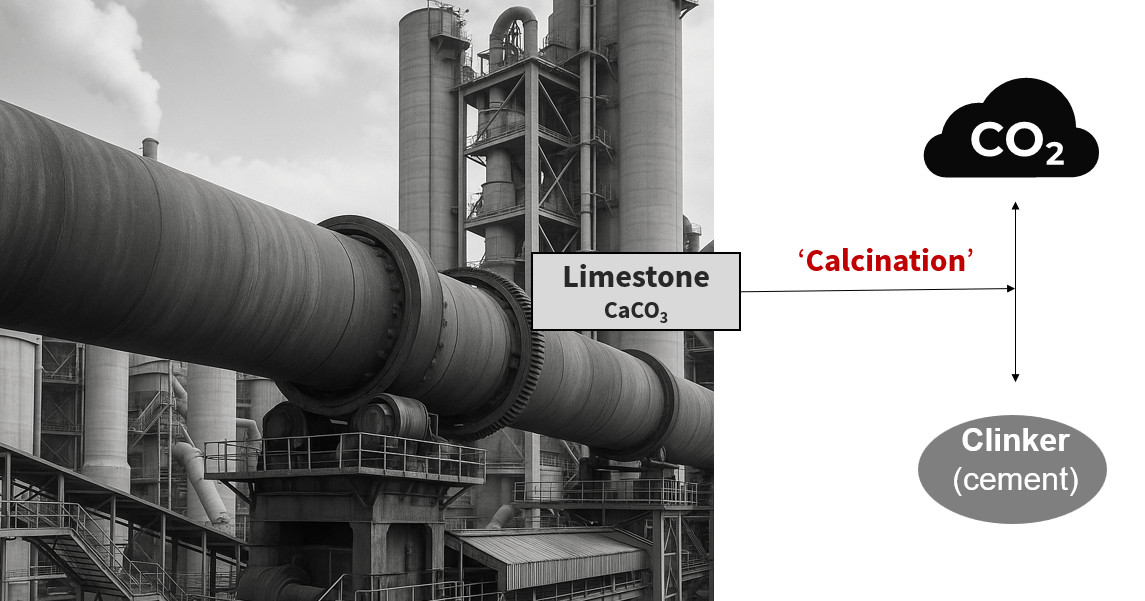
This process is where concrete has earned its not-so-glamorous original reputation as a carbon-intensive manufacturing process. This comes from the energy needed to run production systems, including the heating of limestone over 1,500 degrees F, resulting in quicklime. But as we know, less cement is used in ORCO CMU than most traditional concrete block, greatly offsetting its upfront impacts while offering greater benefits through longevity and no-maintenance upkeep. Repair and replacement in other materials makes for more use and more emissions – so why not build once and for decades?
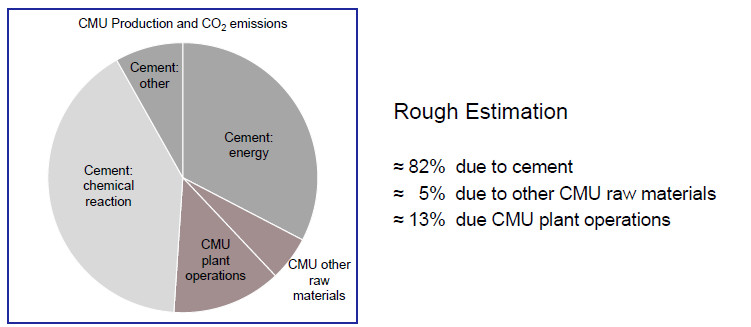
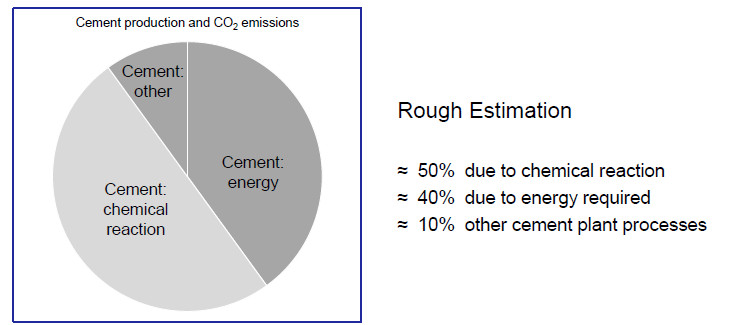
As a reminder, concrete only comprises roughly 10-15% of the makeup of CMU but it accounts for 85-90% of its emissions when produced. If we isolate and observe cement emissions on their own, roughly 40% of its carbon emissions are caused by heating the limestone and other raw materials and 50% is due to the calcination chemical reaction. This is what we refer to as sequestration potential, or Carbonation Potential. Put another way, the Carbonation Potential is the total amount of carbon emissions that the cement in this reaction could reabsorb if all of the calcium hydroxide and cement (CSH) gel fully reacted with the CO2. In porous dry-cast concrete block, that potential is much higher than wet-cast or poured concrete.
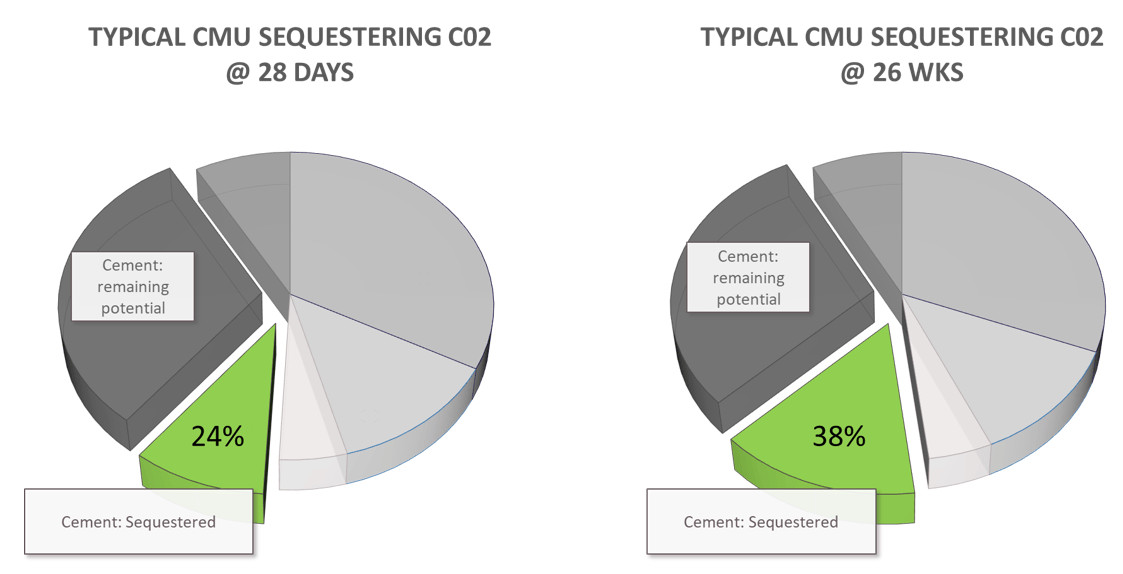
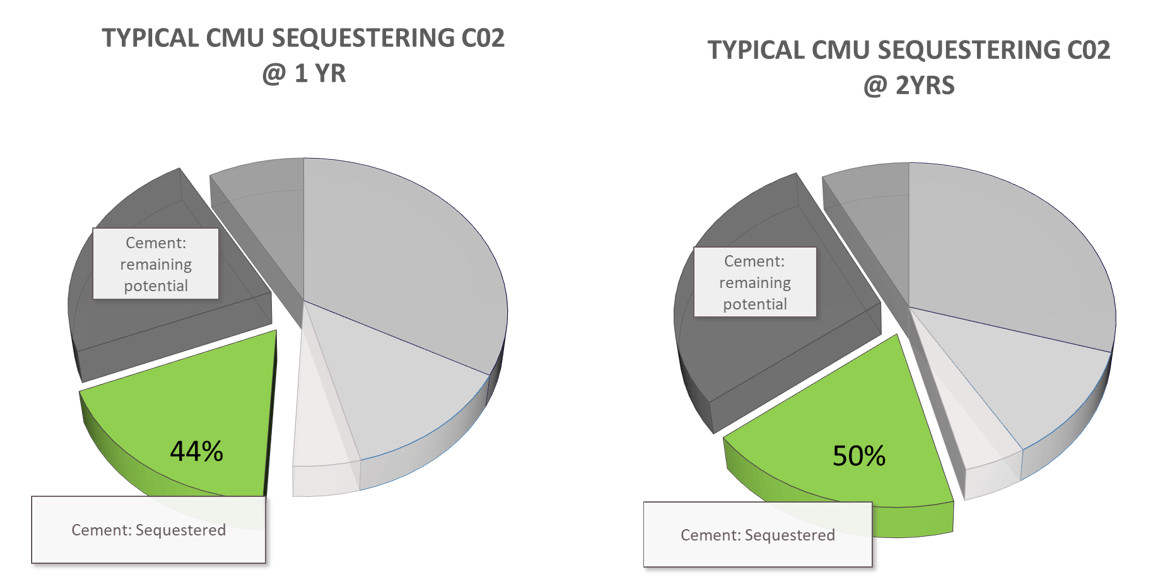
Can CMU reach its full carbon sequestration potential? Like any good geoscience process, it takes time – but some of these benefits are realized relatively quickly! Within weeks, the sequestration process moves quickly to capture and secure carbon emissions – 44% of emissions from cement claimed within a year. It will continue to absorb and hold carbon throughout its life, and even after.
There are numerous opportunities within building projects where concrete masonry can play a role, even if it’s not the primary structural material used. Want the benefits of block without the appearance of block? Try incorporating veneers and elevate projects with a wide variety of aesthetic finishes all while leveraging the advantages of highly-efficient CMU. Of course, to maximize the sequestration potential of CMU, it would be best to opt for exposed masonry – it has the greatest carbon intake and properties for carbon control. By experimenting with CMU usage in foundations, partitions, parking structures, privacy walls, and even entire homes, you can expand your material strategies to incorporate the power of carbon sequestration into your next project – a decision that can change the world, one block at a time.
Sources: